Why Dynamic, On-Demand Expertise Is Replacing Traditional Hiring Models
Fractional Talent
Fractional Hiring
Fractional Executives


Robert Grashuis
CXO & Cofounder, TalentLoft
How organizations are redesigning their operating architecture to meet market velocity
For years, the term "fractional talent" carried a narrow implication: a cost-containment mechanism, a workaround for companies that couldn't justify a full-time hire. That perception has expired.
Today's market dynamics have elevated fractional expertise from a tactical alternative to a strategic operating model. Organizations across industries—especially those navigating transformation, digitization, and innovation—are shifting away from legacy hiring practices and toward flexible, outcome-aligned expert engagement. In this environment, on-demand expertise has become crucial for organizations seeking to remain competitive and agile.
A Foundational Redesign
This isn't simply labor arbitrage. It's a foundational redesign of how companies mobilize capability. Businesses increasingly require hybrid teams that combine:
Strategic leadership
Deep specialist execution
These teams drive real outcomes, and companies cannot afford to wait for the long recruiting cycles associated with traditional roles. Clients benefit from this shift by gaining access to:
Specialized on-demand talent
Interim executives
Experts who can support a wide range of business needs and projects
Accelerating Market Demand
As these needs compound, the demand for dynamic, on-demand expertise is accelerating. On-demand talent not only accelerates development of products, technology, and services, but also streamlines processes by:
Refining operational workflows
Optimizing deployment pipelines for organizations
Analysts now forecast a 30–35% surge in fractional hiring by 2026, reflecting a broader structural transformation in how organizations acquire senior talent.

The Decline of the Legacy Hiring Playbook
Legacy hiring models were built for a slower economy—one that assumed predictability, long planning cycles, and incremental change. That environment no longer exists. Modern operating realities require immediate mobilization of expertise, faster decision cadence, and execution models that can flex in real time.
Traditional full-time hiring introduces unnecessary drag:
Recruiting cycles that stretch months and delay execution
High fixed costs regardless of utilization
Static roles poorly aligned to evolving business needs
Low adaptability when teams must scale up or down quickly
The result is organizational inertia? Work stalls. Initiatives lose momentum. Leadership is forced to choose between overhiring, understaffing, or overextending internal teams—all suboptimal choices in a competitive landscape.
On-demand experts help organizations manage workload fluctuations and operational challenges by efficiently overseeing support requests during peak periods, ensuring smooth operations and high customer satisfaction.
Fractional talent eliminates this friction by enabling companies to deploy seasoned operators at the precise point of value creation. It shifts the model from "find someone to fill a seat" to "activate the right capability at the right time."
Why Dynamic, On-Demand Expertise Is Winning
Modern organizations are aligning around three non-negotiables: speed, precision, and outcome accountability. Full-time hiring struggles to deliver on any of these at scale. Dynamic talent models, on the other hand, are built for them. Organizations can now engage on-demand experts for specific projects, accessing specialized skills without long-term commitments.
Precision Talent Deployment
Businesses no longer need generalized roles—they need exact expertise aligned to specific phases of their roadmap. Organizations increasingly seek "principal-level specialists" who can operationalize strategy, not just advise from a distance.
Expert advice from these specialists provides actionable recommendations that help clients make informed decisions. On-demand experts enable this micro-alignment of skill to need. Key skills and roles are critical to ensuring project success and driving organizational performance.
Speed to Impact
Time-to-placement is becoming a competitive differentiator. Traditional recruiting can take 90–180 days—or more for executive roles. Dynamic talent platforms now match companies to vetted experts in days, not months.
On-demand experts deliver quick, reliable answers to pressing business questions, helping organizations solve critical issues efficiently. This rapid activation bypasses procurement drag and accelerates value capture.
Cost Efficiency Without Talent Compromise
This isn't about "cheaper." It's about smarter allocation of senior expertise. Companies pay for impact windows rather than fixed overhead. They eliminate long-term costs without reducing capability depth. On-demand expertise also provides ongoing support, giving organizations access to expert assistance and guidance as needed.
Alignment to Outcomes, Not Tenure
Traditional roles incentivize presence, not performance. Fractional models invert this. Engagements are structured around:
Deliverables
KPIs
Roadmap outcomes
Measurable value creation
This mirrors the accountability frameworks for an outcome-driven engagement model. For example, a company may bring in a fractional CTO to lead a cloud migration project during a peak period, ensuring expert oversight and successful delivery. Clearly defining the scope of work, responsibilities, and expectations is essential to align on-demand experts with organizational goals and ensure effective integration.
Characteristics of Experts in the On-Demand Economy
The rise of the on-demand economy has ushered in a new generation of professionals who deliver specialized expertise precisely when and where organizations need it most. These independent consultants and subject matter experts are not bound by the constraints of traditional full-time employment, allowing companies to access the right expertise without the burden of a long-term commitment or unnecessary overhead.
Expert Backgrounds and Expertise
On-demand experts are typically seasoned professionals with deep domain knowledge, often honed at leading consulting firms or within top-tier organizations. Their backgrounds span critical industries such as:
Technology
Finance
Healthcare
They are frequently at the forefront of emerging fields like artificial intelligence and machine learning. This positions them as invaluable partners for companies seeking to drive innovation, solve complex challenges, and accelerate business growth.
Key Differentiators
What sets these professionals apart is their ability to provide on-demand access to expert knowledge and skills tailored to specific projects or business needs. Whether a company is:
Navigating a digital transformation
Launching a new product
Addressing a regulatory challenge
On-demand consultants can be engaged for targeted guidance and rapid problem-solving. This agility enables organizations to respond to market shifts with speed and precision, enhancing their competitive edge.
Significant Benefits
The benefits of engaging on-demand experts are significant:
Cost savings - Companies pay only for the expertise they need, when they need it, rather than maintaining a large roster of full-time employees
Greater flexibility - Organizations can scale their capabilities up or down in response to changing business demands
Regional advantages - In regions like the Middle East, where industries such as technology and finance are evolving rapidly, the demand for on-demand talent is especially pronounced
Finding the Right Expert
To connect with the right expert, organizations increasingly turn to specialized platforms and networks that curate pools of independent consultants and thought leaders. These platforms streamline the process of finding professionals with the precise skills and knowledge required for a given project, ensuring a strong fit and immediate impact.
Strategic Impact
Ultimately, on-demand experts are more than just external advisors—they are critical drivers of business innovation and transformation. Their specialized expertise, independence, and ability to deliver results on a project basis make them essential partners for organizations aiming to achieve their business goals in a fast-paced, ever-changing world.
By leveraging the capabilities of these professionals, companies can enhance their workforce, accelerate growth, and stay ahead of the curve in today's dynamic business landscape.
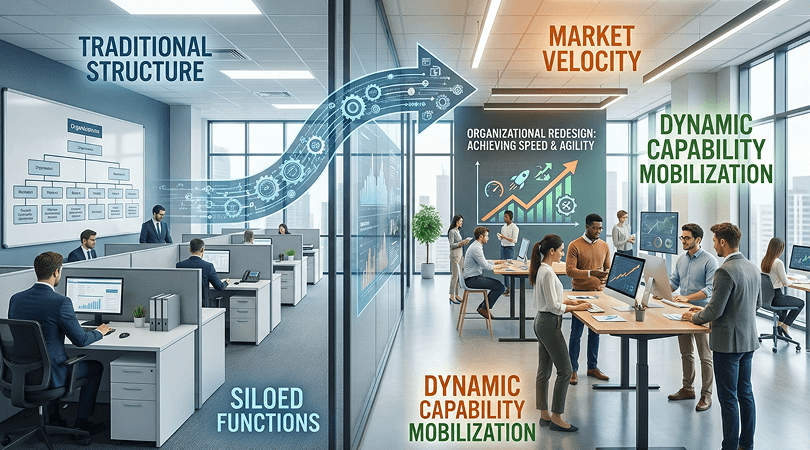
The Rise of the Hybrid Talent Ecosystem
What's emerging is not a freelance marketplace. It's a new organizational architecture—one where internal teams, fractional specialists, and fractional executives operate as an integrated ecosystem designed for clarity and velocity. Each team within this structure collaborates closely, leveraging their collective expertise to drive business outcomes. Collaboration is at the heart of this ecosystem, enabling continuous knowledge sharing and innovation across all layers.
This model features three core layers:
Layer 1 — Internal Teams
Focused on continuity, institutional knowledge, and sustaining the core business.
Layer 2 — Fractional Executives
Providing strategic vision, governance, and cross-functional alignment. This positions leaders as critical anchors for transformation, ensuring that strategy and delivery remain unified.
Layer 3 — Fractional Specialists
Senior operators who translate strategy into execution. These specialists are highly targeted, AI engineers, data scientists, UX strategists, automation architects, domain consultants—activated exactly when the business needs them. This network of professionals ensures rapid access to specialized knowledge and skills.
Together, these layers create a fluid, adaptive resource model that supports:
Rapid scaling and descaling
Cross-functional alignment
Reduced friction between strategy and execution
Outcome visibility from the first day of engagement
This hybrid system reflects confidence, clarity, and outcome orientation—hallmarks of modern talent ecosystems built for measurable impact. The collective community of experts within this model provides organizations with a shared pool of resources and knowledge.
Organizations benefit from this hybrid approach by integrating flexible talent while maintaining alignment and cultural fit. Choosing the right partner—whether an external expert or a platform—further enhances scalability, quality, and operational efficiency.
Why This Shift Is Permanent
This transformation isn’t a pandemic artifact or a temporary hiring trend.
The future of on-demand expertise is defined by ongoing evolution, with new trends and advancements continually shaping how organizations access and deploy talent. It’s a structural response to systemic pressures:
Digital transformation that outpaces traditional skills cycles
Complex initiatives requiring both strategic leadership and specialist depth
Talent scarcity in specialized domains such as AI, data, design, and modernization
A global workforce that now prioritizes flexibility and portfolio careers
Executive buyers who can no longer justify fixed overhead for episodic needs
The market is already responding with emergent platforms that combine executive leadership and specialist delivery into unified experiences. Continuous research and adaptation are essential for organizations to stay ahead in this rapidly changing environment. Companies that fail to adapt are already experiencing delays, inefficiencies, and slowed innovation cadence.
Dynamic expertise is not experimental. It’s the new normal—and the organizations that leverage it will outpace those that do not.
The Bottom Line
Dynamic, on-demand talent is replacing traditional hiring because the market has outgrown the constraints of static roles and fixed headcount. Companies need expertise in motion, not headcount in waiting. They need high-caliber operators who can integrate quickly, execute decisively, and deliver measurable outcomes without the friction of legacy staffing models. On-demand expertise is especially valuable during peak sales periods, helping businesses manage increased sales activity and drive better sales outcomes.
What’s emerging is a talent architecture built for speed, adaptability, and strategic precision. And it’s already redefining how modern companies compete and scale.